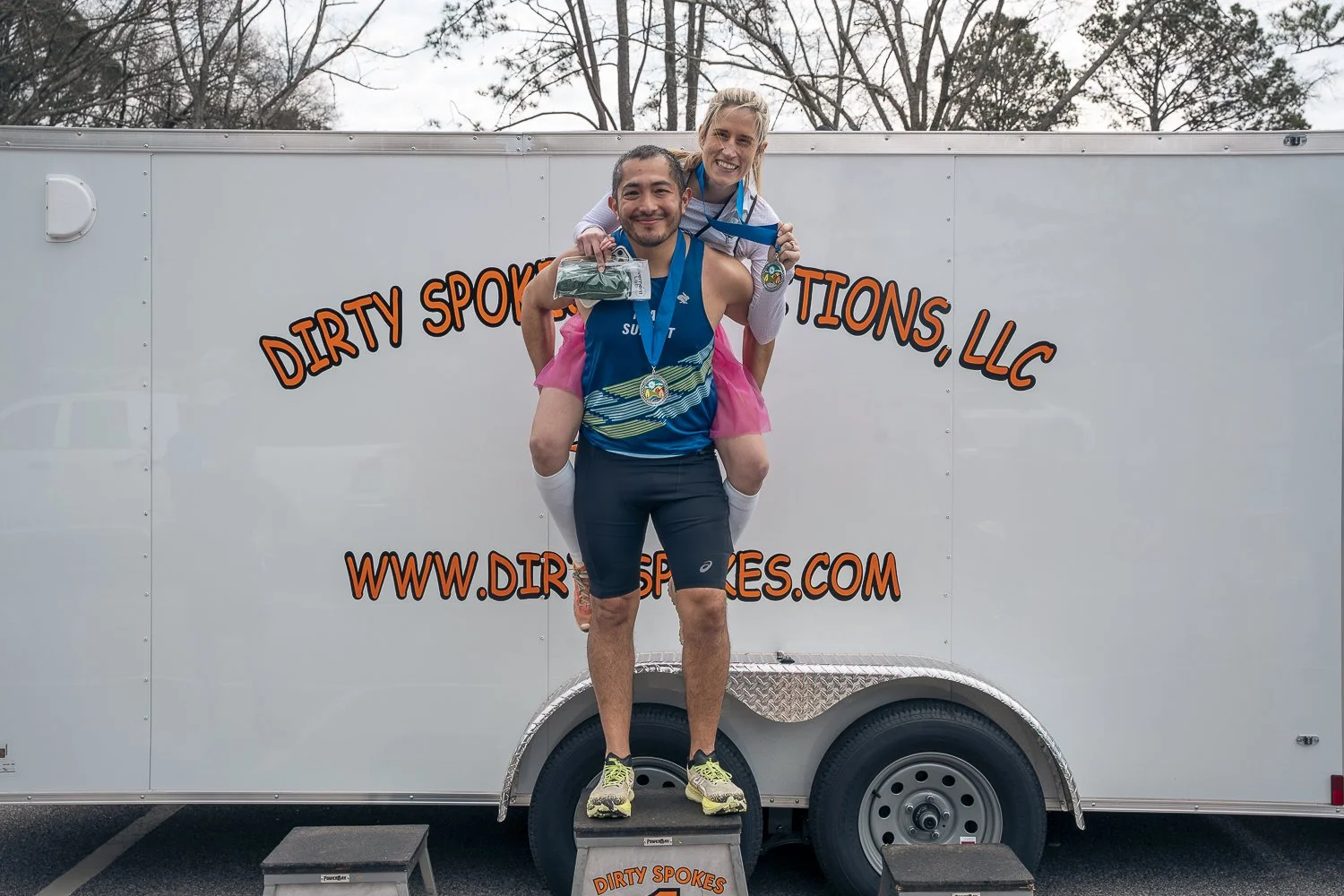
Photographing the Thrill in the Hills 2026 Ultramarathon
For the second year in a row, I volunteered to photograph the Dirty Spokes Thrill in the Hills 50K -- my favorite ultramarathon in Georgia. Ultramarathons are relatively rare in the state, and this event brings together a dedicated community of runners willing to spend hours navigating forest trails, hills, and unpredictable winter weather.
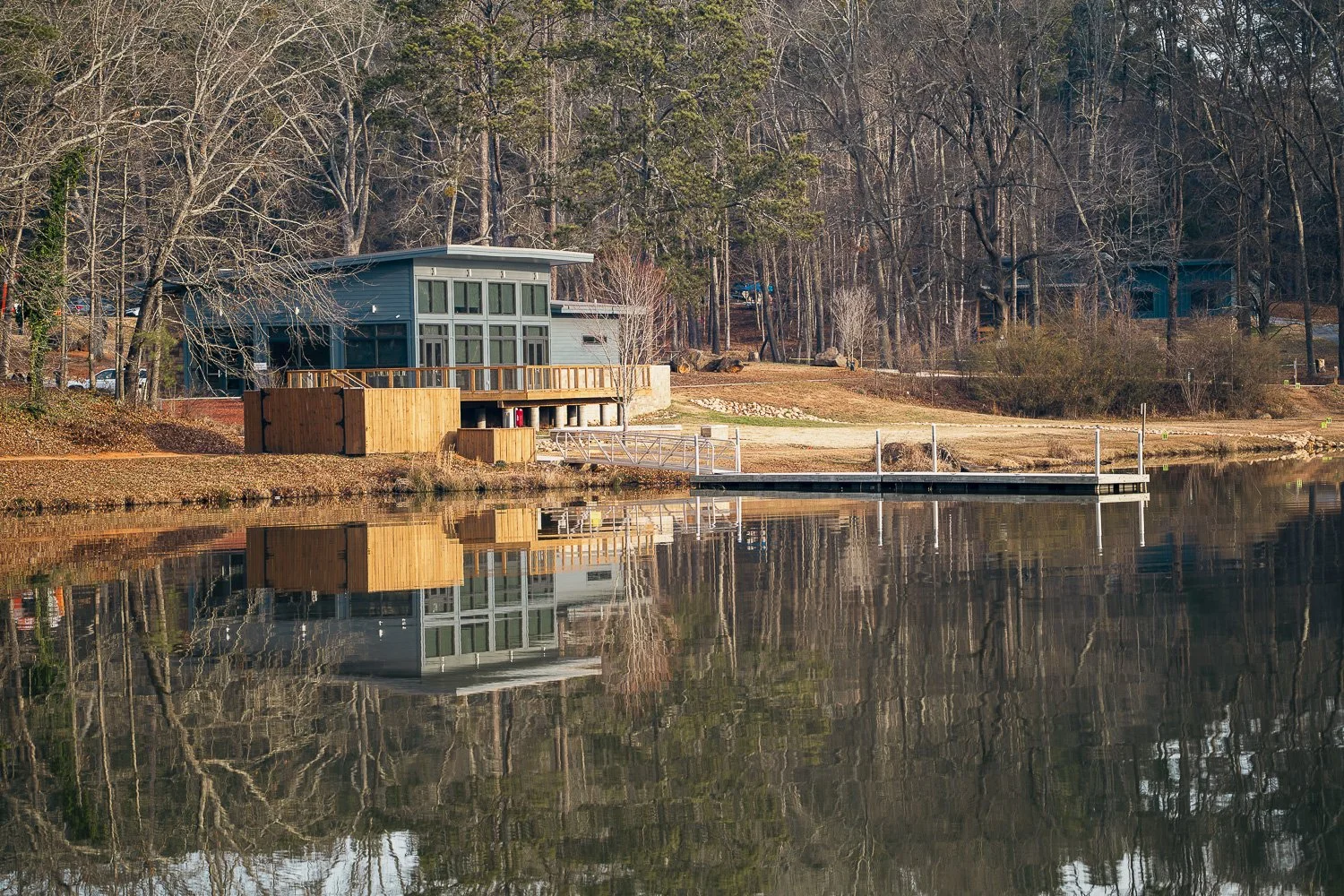
February might not seem like the most ideal time for photography, but in the South, it’s actually one of the best seasons to work outdoors, and this year, the weather ended up being quite exceptional.
This time around, the assignment was simple: capture as many runners as possible while still creating a variety of scenes that reflected the spirit of the race.
As a solo photographer, it all comes down to the preparation.
Planning the Shoot
Trail races can be a challenge for photographers. Unlike road races, where runners pass through wide streets, trail races funnel athletes into narrow trail corridors. You have to be quick, flexible, and ready to adapt.
I was working alone, so I needed to be strategic about where I positioned myself. My first big decision would be to focus primarily on the 50K ultramarathon, the marque race of the day, rather than trying to cover all three races.


Before race day, I studied the course map and made a scouting trip to the Fort Yargo State Park. I decided the start/finish line would be my main anchor point since it would offer me an opportunity to capture the start and finish of the race.
From there, I could work backwards along the course seeking additional shooting spots within walking distance.
Five-Minute Rule
One rule guided nearly every decision I made in my planning: every location needed to be within five minutes of the finish line. This rule served as my safety measure -- If the lead runner appeared near the finish while shooting in another location, I would need enough time to get back and capture their achievement.
To test this, I literally walked the trail sections with a stopwatch, timing how long it took to move between positions. This preparation would be the key to allowing me to focus entirely on photography instead of worrying about missing critical moments.
Choosing the Gear
For the race, I carried two camera bodies.
My primary setup was the Sony A7R V paired with the Sigma 70-200mm F2.8 DG DN OS | Sports, which allowed me to isolate runners as they moved through the forest trails and capture the details.
My secondary camera was the Sony A7 IV paired with the Sigma 24–70mm F2.8 | ART. This lens gave me the flexibility to capture wider environmental scenes and served as my fallback if a runner was too close for the telephoto range.
Both lenses have a constant F2.8 aperture, which is incredibly useful in the wooded sections of the course where sunlight is limited. The fast aperture allowed me to maintain quick shutter speeds to freeze runners in motion as they passed through the frame.
Race Morning
The morning of the race, I arrived an hour before the first runners took off. The parking lot was still dark, and runners were preparing for a fun but strenuous race -- stretching, checking gear, and getting mentally prepared for the miles ahead.

The atmosphere before an ultramarathon is always unique. It's a raucous environment with a sense of anticipation, with racers preparing to push themselves through the woods for several hours. But when the race horn sounded, the runners were quick to disappear into the forest trails.
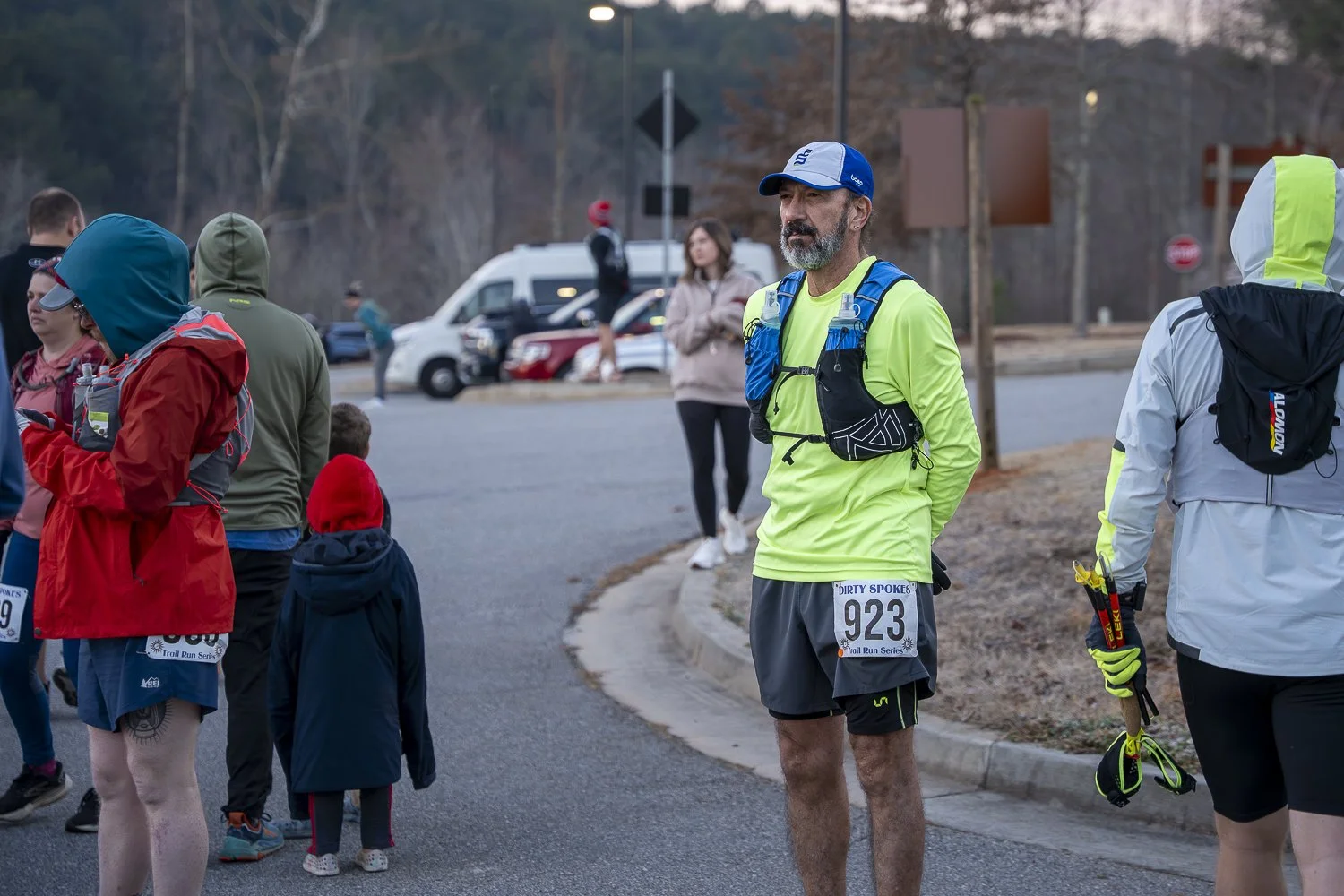


That’s when my work really started.
Moving Through the Course
After capturing the early moments at the start line, I began moving between my planned shooting locations.

In some cases, that meant hiking between anchor points along the trail. In other cases, it meant jumping into my Jeep and driving deeper into the park (Already breaking the rules!) to reach areas where the runners would appear on the trail.

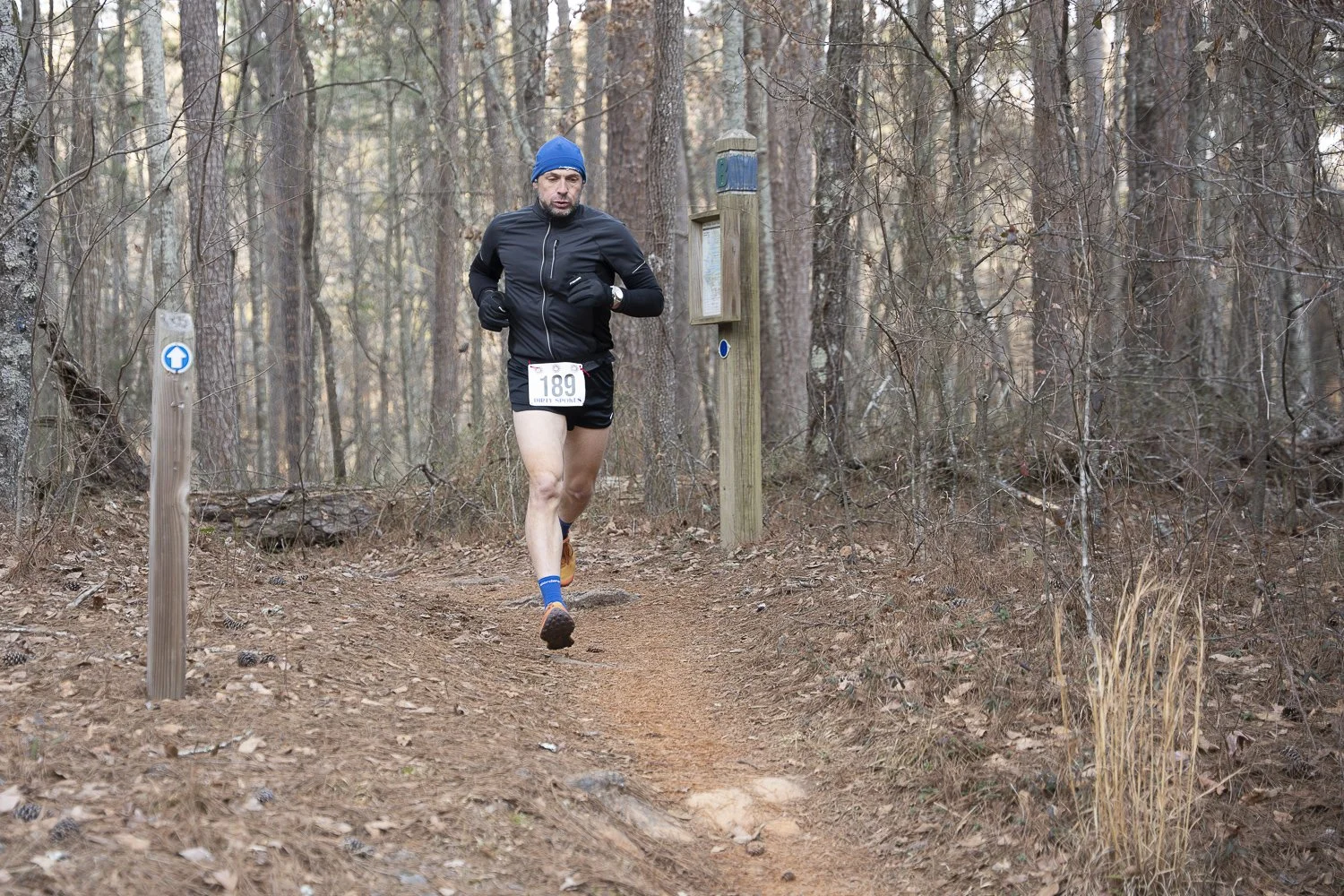
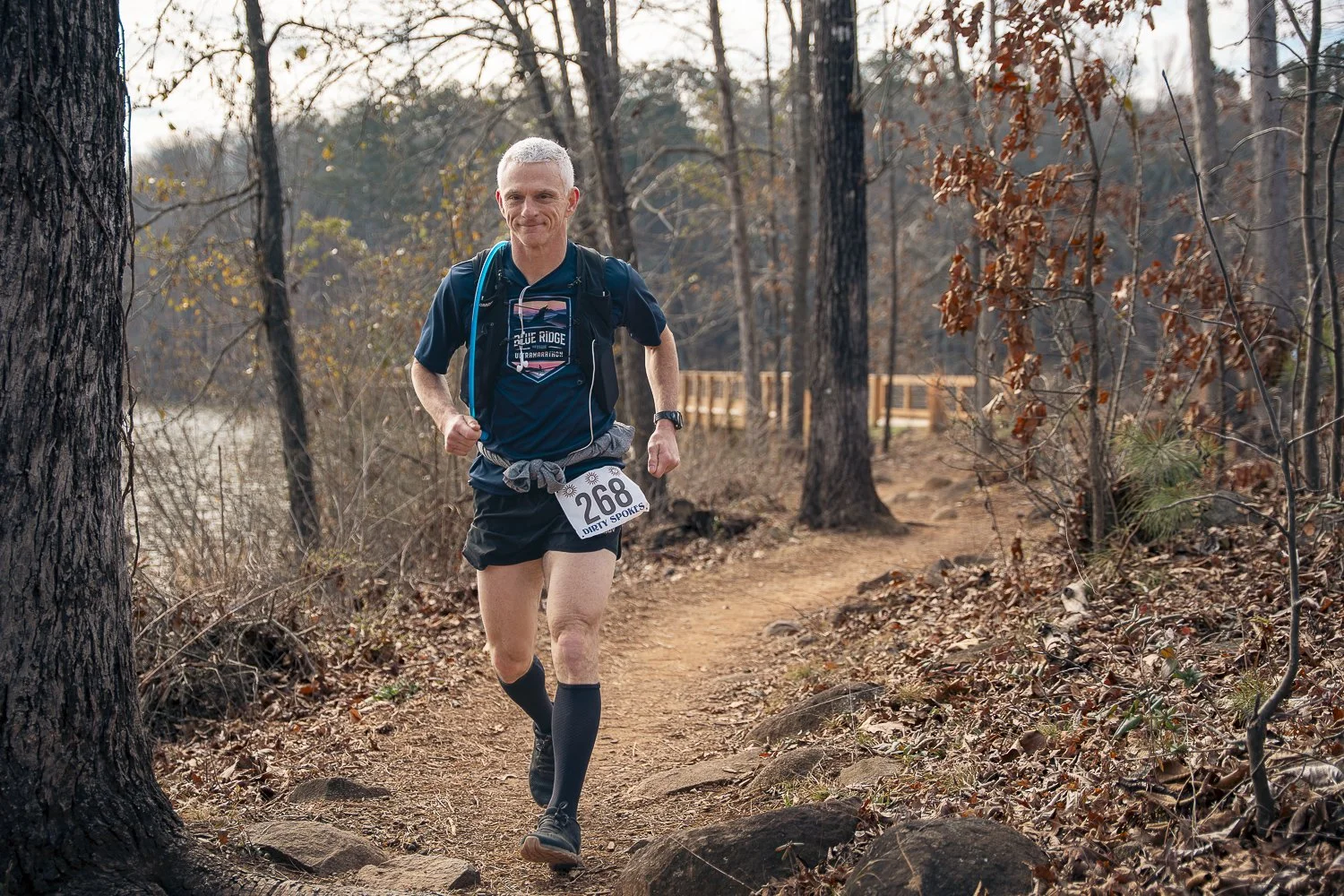
Having the flexibility to move quickly between locations allowed me to capture a wider variety of scenes — runners emerging from wooded trails, climbing ascents, or racing through the forested corridors of the course.
On race day, mobility became my best friend.

A Close Call at the Finish
One of the most intense moments of the day came near the end of the race.
At my final anchor point along the trail, I suddenly saw the lead 50K runner approaching a bit sooner than expected. After photographing him as he passed, I could tell how quickly he was approaching the finish line -- five minutes wasn't going to be enough.


So I grabbed my gear and ran. Dual cameras in my hands, I sprinted back toward the finish line, hoping to arrive just in time.
Thankfully, the preparation paid off.
I reached the finish area moments before the runner crossed the line, giving me just enough time to frame the final shots as he completed the race.
It was one of those moments where planning, timing, and keen awareness helped me capture the shot.
Why I Love Photographing Trail Races
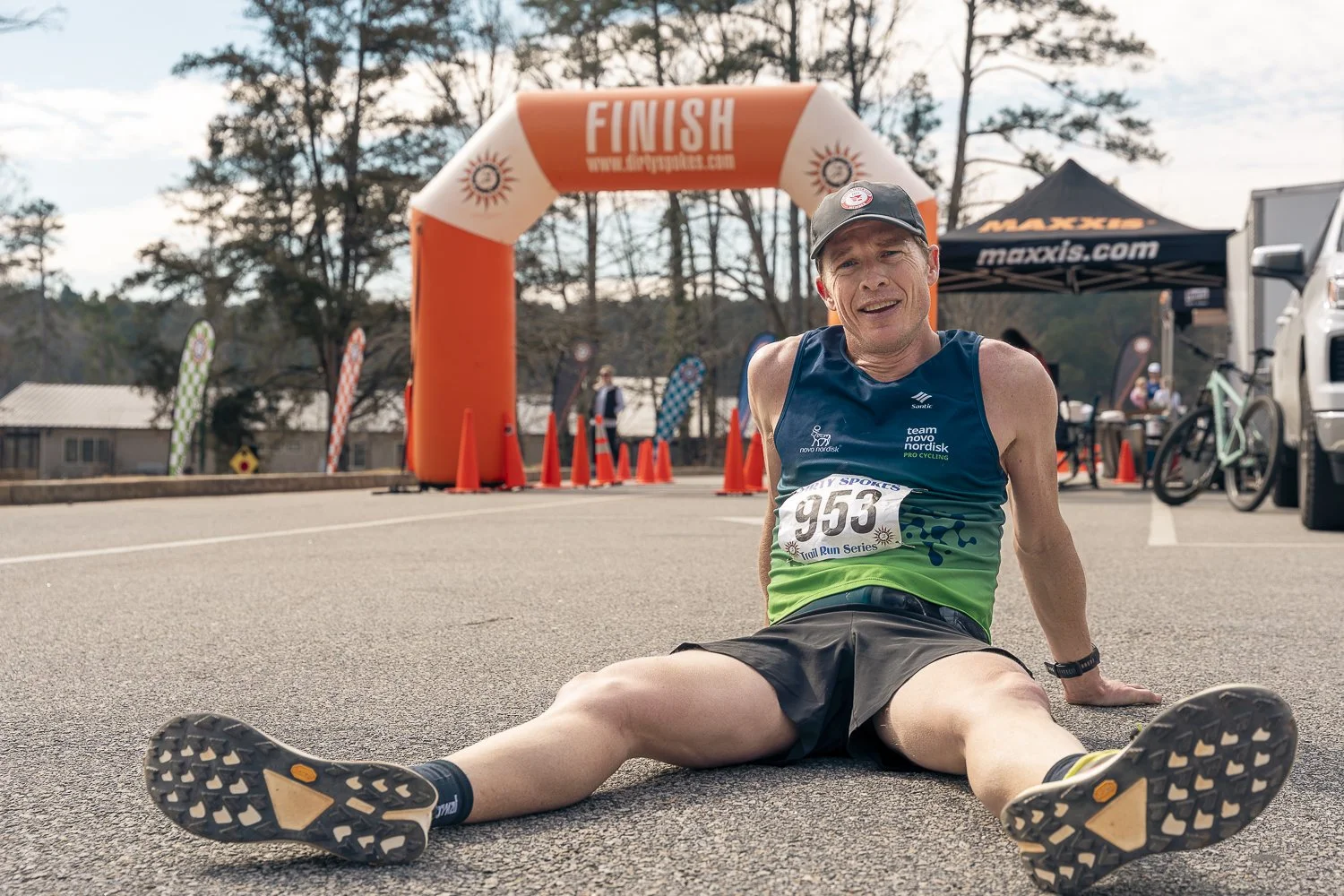
As a runner myself, trail races have always been about a community of people looking to push themselves.
As a trail runner, you'll experience solitude, isolation, and pain as you push yourself through the landscape. As a photographer, it's relatable. It's the closest thing I have found that mimics the feeling of being on the trail without running the race myself.
Except when you have to outrace the leader to the finish line just to grab the shot.